
Storm water damage in Benicia covers wind and rain entering through the roof, windows, walls or doors, and storm water that backs up from an overwhelmed drain. It is different from rising flood water, which is covered separately. The 24/7 phone line is open for storm cleanup, including after hours when a storm hits.
The first step is to keep the building safe. Storm damage may include broken glass, downed lines and wet electrical equipment, and those are matters for emergency services.
Storm water inside is an emergency
Stay away from downed lines and wet electrical equipment. If the roof is damaged, a tarp or temporary patch from a roofer helps. Inside, move belongings and photograph the damage. Call the line to arrange extraction and drying.
Do not climb on a wet roof. Water already inside can wait a few hours for safe conditions, but it should not wait days.
How storms get water into buildings
- Wind-driven rain through damaged shingles, vents or flashing
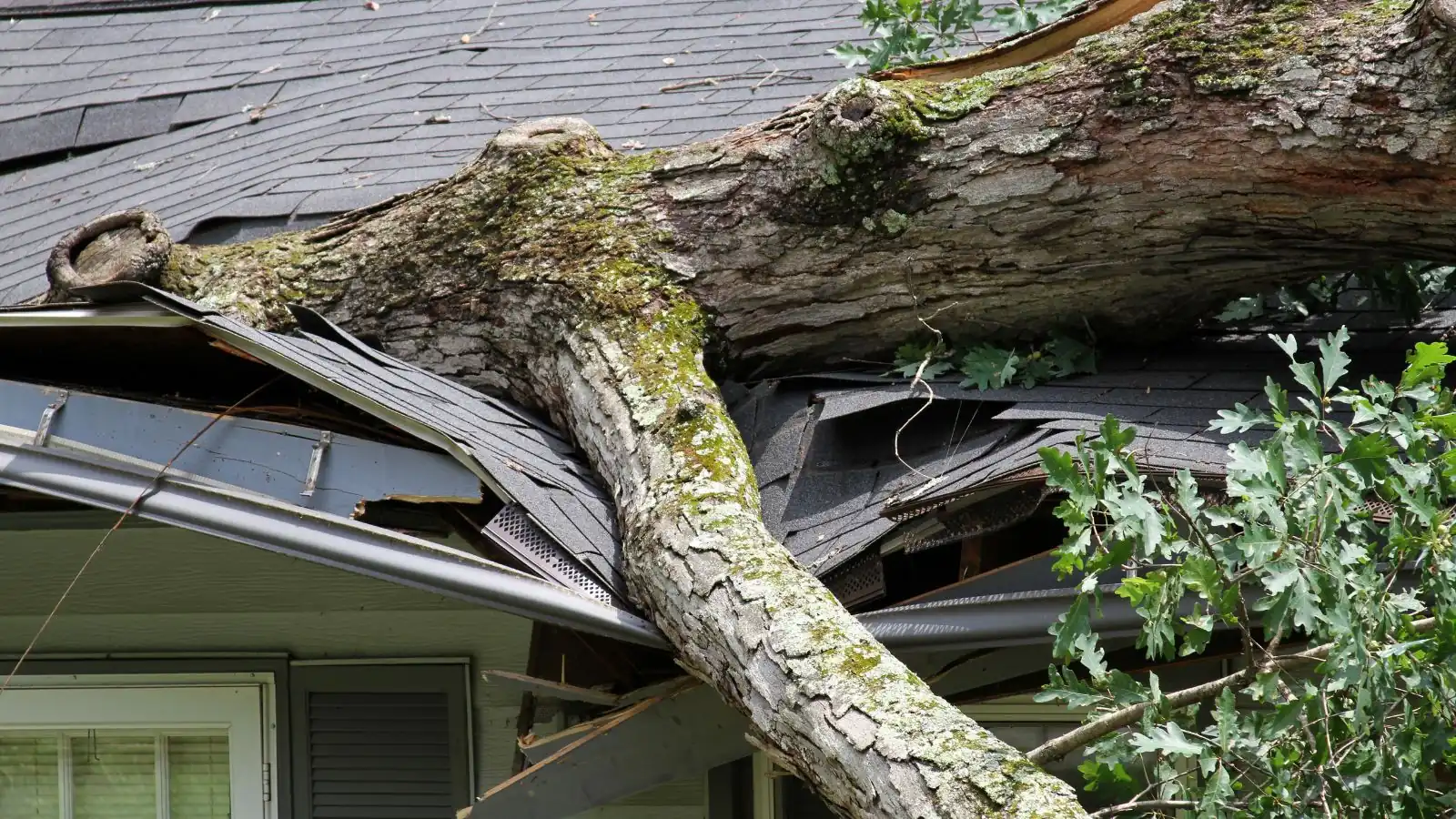
- A tree limb that breaks the roof, as photographed after storms elsewhere
- Windows and doors that leak under pressure
- Gutters and drains that overflow and push water toward walls
- Storm drains that cannot keep up and back water toward a structure
Each path leaves a different pattern. Roof entry often shows as ceiling stains and wet insulation. Wall entry shows as swollen baseboards and stains on the lower wall. Drain overflow shows as water at the foundation edge.
| Entry point | What it wets | First action |
|---|---|---|
| Roof or flashing | Insulation, ceiling, upper walls | Tarp, extraction, ceiling check |
| Windows and doors | Sills, wall base, flooring | Dry the sill area, check wall |
| Gutters and downspouts | Foundation edge, lower walls | Redirect discharge, dry base |
| Drain backup | Floor and lower walls | Extraction, water category check |
A documented Benicia drainage event
On Saint Augustine Drive in Benicia, a buried three-foot drainage pipe was reported to overflow in major storms, sending water into homes. CBS reported in April 2017 that residents had flooded before, most severely in 2012, and that the city said the pipe needed replacing. This is one documented street, not a claim about every neighborhood.
The lesson for anyone is that storm damage can come from drainage capacity as well as from the roof. Look at where water ran outside before you decide where to look inside. The city's public works department is the contact for public drainage questions.
Cleanup after storm water
Cleanup starts with extraction, then removal of wet insulation and materials that will not dry, then drying with moisture checks. Water from outside is treated as higher risk than clean supply water, so protective steps may be needed. See structural drying and dehumidification for how readings are used.
What shapes the cost of storm water cleanup
Scope and price are explained before work starts. The drivers are:
- Where the water entered and how much
- Whether the water was clean or carried debris
- Insulation, drywall and flooring affected
- Drying days and equipment
- Roof or exterior repair, which is separate
Want your real number? Call (833) 521-1033 and describe the storm damage.
Insurance and storm damage
Wind and rain damage is often covered when it is sudden, while flood and surface water are often excluded. Check your policy and ask your insurer. Photographs and a written scope help.
What to document after a storm
Storm losses often involve several paths for the water, so documentation matters. Photograph the water line on walls, the places water entered and any damage to the roof, windows or doors. Note the date and time, and record how long the water was present. These details help sort out what was wind-driven rain, what was runoff and what was a roof failure.
Wet carpet, drywall and insulation are checked with a meter, and materials that cannot be dried are removed. Because storm water can carry dirt and debris, it is often treated as contaminated, which affects what can be saved. The crew keeps a log of readings and equipment so the drying is documented from the first visit.
- Stay away from downed power lines and flooded streets
- Do not touch outlets or cords in or near standing water
- Photograph the damage before moving anything
- Cover openings only if it is safe, for example with a tarp from the ground
- Call your insurer and ask what it needs from you
A roofer repairs the roof and a drainage contractor fixes yard grading. The restoration crew handles the water inside and records what it found, so your roofer and your insurer have the same facts.
Storm water cleanup is documented against ANSI/IICRC S500. A roofer's license for the repair can be checked on the Contractors State License Board site.
Common questions
Do you handle storm water damage emergencies at night or on weekends in Benicia?
Yes. The line is open 24/7.
Do you repair roofs?
No. A roofer does that. The crew handles interior water.
Is storm damage the same as flood damage?
Not always. Flood water is rising or surface water. See the flood page.
Should I call my insurer first?
You can do both. Insurers often want photos before cleanup.
Do you serve Vallejo?
Yes. See Vallejo.
Storm water inside?
Photograph the damage when it is safe and call the 24/7 line.
☎ Call (833) 521-1033