
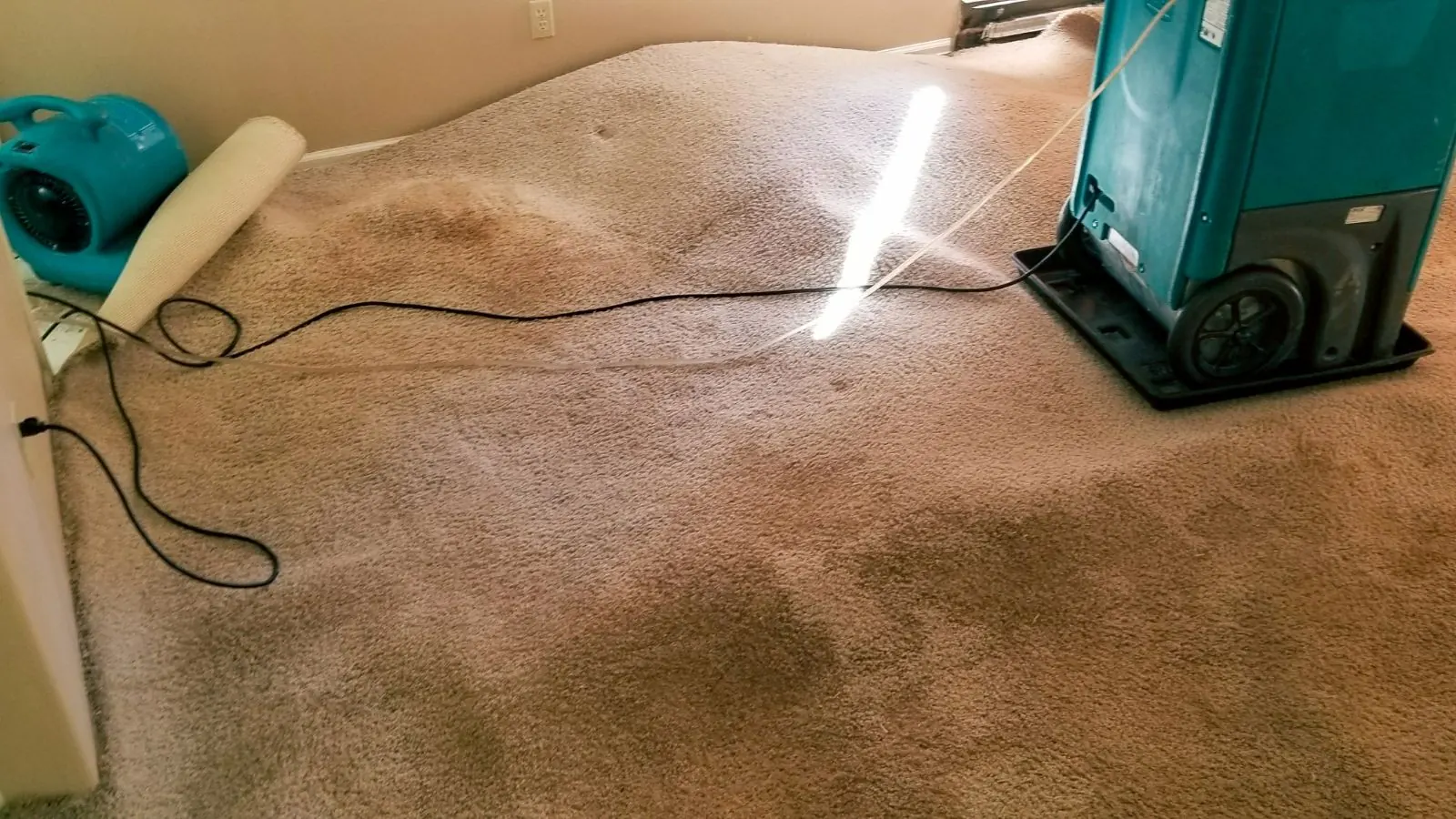
Carpet water damage in Benicia homes depends on two things, the type of water and how long it stayed. Carpet and the pad beneath it soak up a lot of water, and the pad often holds it long after the surface feels dry. This page covers when carpet can be extracted and dried and when it is removed. The 24/7 phone line is open.
If the water was clean and the carpet is caught quickly, drying in place is often possible. If the water was contaminated, removal is the standard.
Soaked carpet: act quickly
Lift furniture legs onto blocks or foil pads, and remove small items. Do not run a household vacuum over wet carpet. Open windows if the weather helps, and call. The sooner extraction starts, the better the chance of drying in place.
If the water came from a toilet, a sewer drain or a flood, keep people out and read sewage backup cleanup. Contaminated carpet is usually removed.
What decides whether carpet is saved
- Water category: clean supply water gives carpet the best chance
- Time: the longer it stays wet, the less likely it can be saved
- Pad: the pad holds the water and is often removed even if carpet is kept
- Carpet type: synthetic carpet tolerates drying better than some natural fibers
- Subfloor moisture: a wet subfloor needs drying too
Carpet that is peeled back and dried in place can be put back, while the pad is replaced. Carpet that has been wet with contaminated water is removed and disposed of.
| Water source | Carpet outcome | Pad outcome |
|---|---|---|
| Clean supply line | Often dried in place | Often replaced |
| Appliance (gray water) | Case by case | Usually replaced |
| Sewage or flood | Removed | Removed |
| Long-standing leak | Often removed | Removed |
How carpet is extracted and dried
Extraction wands pull water from the carpet, and carpet and pad may be separated so each can dry. Air movers push air across the surface and under lifted carpet, and dehumidifiers pull moisture from the air. The crew checks the subfloor with a meter.
Mold needs moisture, and wet carpet gives it. That is a reason to dry quickly and verify with readings. For how drying is measured, see structural drying and dehumidification.
What shapes the cost of carpet restoration
Scope and price are explained before work starts. The drivers are:
- Area of carpet and pad affected
- Water category
- Whether carpet can be dried or must be replaced
- Subfloor moisture and drying days
- New carpet and pad
Want your real number? Call (833) 521-1033 and describe the carpet.
Insurance and carpet
Coverage depends on the cause of the water. Sudden damage is often covered, and flood often is not. Ask your insurer. Photographs and moisture readings help.
Carpet, pad and what lies beneath
Carpet is only the top layer. Under it sits a pad, and under that a subfloor or slab. Water usually soaks the pad first, since it acts like a sponge. Pad is inexpensive and hard to dry, so removing and replacing it is common even when the carpet itself is kept. Lifting the carpet makes it possible to dry the subfloor properly, which is where hidden damage tends to start.
A crew extracts the water with a wand or a truck-mounted or portable unit, then separates the carpet from the tack strip along a wall to expose the pad. Air movers push air under the lifted carpet and dehumidifiers dry the room. The carpet is then stretched back into place once readings are good, or replaced if it cannot be saved.
| Situation | Usual result for carpet | Usual result for pad |
|---|---|---|
| Clean water, caught within a day or so | Often dried and kept | Often replaced |
| Clean water, left for several days | May be kept if dried well | Replaced |
| Gray or dirty water | Often removed | Removed |
| Sewage or flood water | Removed | Removed |
Why smell and sound matter after the work
If a carpet still smells damp after drying, ask for a reading under it. A squishy sound underfoot or a patch that feels cool to the touch can mean moisture is still there. Catching it early means an easy fix. Ignoring it can mean rot in the subfloor or growth under the carpet that is expensive to reverse.
Common questions
Is wet carpet an emergency?
If the water is active or contaminated, yes.
Can I dry carpet myself?
Fans can help a small clean-water spill, but pad and subfloor need checking.
Do I need to replace the pad?
Often. The pad holds water and is inexpensive to replace.
How do I know if the subfloor is wet?
A moisture meter shows it.
Do you serve Vallejo?
Yes. See Vallejo.