
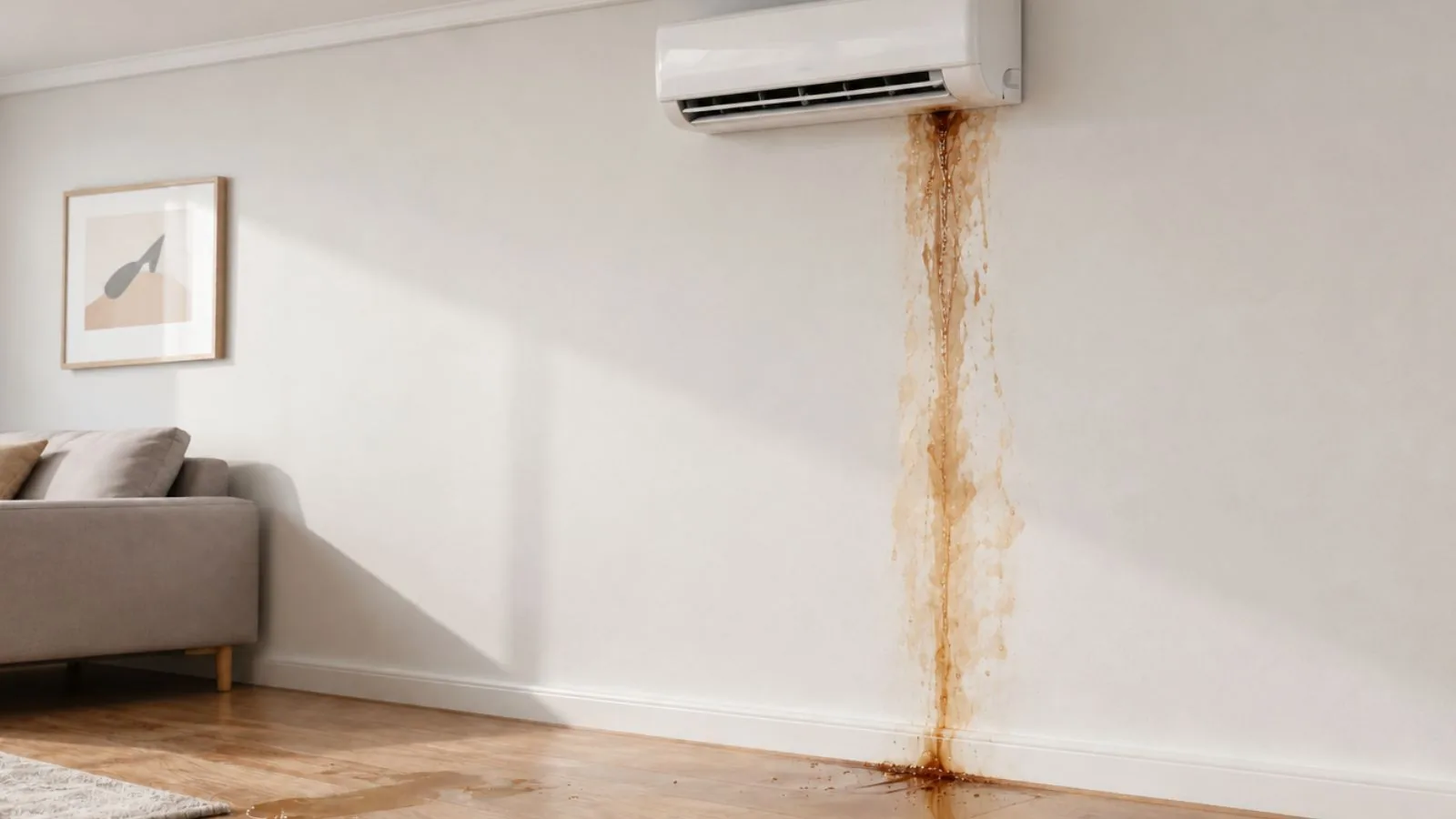
AC leak water damage in Benicia homes comes mostly from condensate, the water an air conditioner removes from the air. When the drain line backs up, the pan overflows into a ceiling, a closet or onto floors. This page covers the water damage from an AC or HVAC leak and how it is dried. The phone line is open 24/7 for questions.
Cleaning or repairing the HVAC system is a heating and cooling job. The restoration crew deals with the water the system released.
What to do when an AC is leaking indoors
Turn the air conditioner off at the thermostat, because a running system keeps producing condensate. If water is dripping from a ceiling vent or an air handler, place a container, and if the leak is heavy, close the system breaker only if the panel is dry. Take photos of the unit, the pan and the wet area.
If the ceiling is sagging below an attic unit, treat it as urgent and read ceiling water damage repair. Otherwise, a call to the line is a good next step, and the crew plans drying while an HVAC technician fixes the cause.
How AC leaks damage a home
Condensate lines are small, and algae and debris can block them. When blocked, the drain pan overflows or a safety switch fails to shut the unit. In an attic, water drips through insulation and ceiling drywall. In a closet, it soaks carpet, baseboards and the lower wall.
A slow condensate leak is easy to miss. Hardwood next to an air handler can cup, a closet floor can feel damp, and a ceiling stain can appear below a unit in an attic. The crew uses moisture meters to find the wet area and dries it with air movers and dehumidifiers.
| Where the unit sits | What the water reaches | Typical drying |
|---|---|---|
| Attic | Insulation, ceiling drywall below | Remove wet insulation, dry ceiling cavity |
| Closet air handler | Carpet and pad, baseboard, lower wall | Pad removal or drying, baseboard check |
| Wall-mounted unit | Wall surface below the unit | Dry wall, check drywall and paint |
| Garage or utility room | Slab, wall base, stored items | Extraction, wall base drying |
Mold and AC leaks
Mold needs moisture, and a long condensate leak provides it. Mold testing and remediation follow their own standard and are a separate job from water cleanup. If you see growth or smell something musty, an independent inspector can test it and your physician can answer health questions. The first step is stopping the water and drying the area.
Drying a wet closet or ceiling quickly is the best way to avoid the question. See structural drying and dehumidification for how equipment is used.
What shapes the cost of AC leak cleanup
Scope and price are explained before work starts. The drivers are:
- How long the condensate leaked
- Whether insulation or drywall is wet
- Flooring type near the air handler
- Drying days and equipment
- Repair of the ceiling, wall or flooring
Want your real number? Call (833) 521-1033 and say where the unit is.
Insurance and AC leaks
Insurers often treat a sudden overflow as water damage, but a leak from poor maintenance may be treated differently. Ask your insurer. Keep the service record and photos of the pan and line.
What gets wet when a condensate line backs up
Most air conditioning leaks come from the condensate drain, the small line that carries water away from the coil. When algae or debris clogs it, the drain pan fills and overflows. The water then runs into whatever sits below the unit, which in many homes is a ceiling, a hall closet or an attic floor. Because the overflow is slow, the damage often goes unnoticed until a stain appears.
Wet insulation is a common hidden result. Insulation that stays soaked loses its value and holds moisture against drywall and framing. A crew checks it with a meter and a thermal camera and removes what cannot be dried, then dries the ceiling and the structure around it.
| Where the unit sits | What the water reaches | What the crew checks |
|---|---|---|
| Attic | Insulation, ceiling drywall below | Insulation, ceiling cavity, framing |
| Hall or utility closet | Carpet, baseboards, wall base | Flooring edge, wall cavity |
| Garage or exterior pad | Slab edge, adjoining walls | Wall base and nearby flooring |
| Wall-mounted or window unit | Wall below, floor edge | Wall cavity and baseboard |
The repair of the unit itself belongs to an HVAC technician. A restoration crew handles the water, the drying and the documentation, and it can tell you what it found so the technician and your insurer both have the facts.
Common questions
Is an AC leak an emergency?
If it is dripping into a ceiling or soaking a floor, yes. Turn the system off and call.
Can the crew clear the condensate line?
No. An HVAC technician does that. The crew handles drying and cleanup.
Can hardwood floors be saved after an AC leak?
Sometimes. It depends on how long it was wet. See hardwood floor water damage repair.
Will drywall need to be replaced?
Only if it is soaked or weakened. Moisture readings decide.
Do you serve Vallejo?
Yes. See Vallejo.