
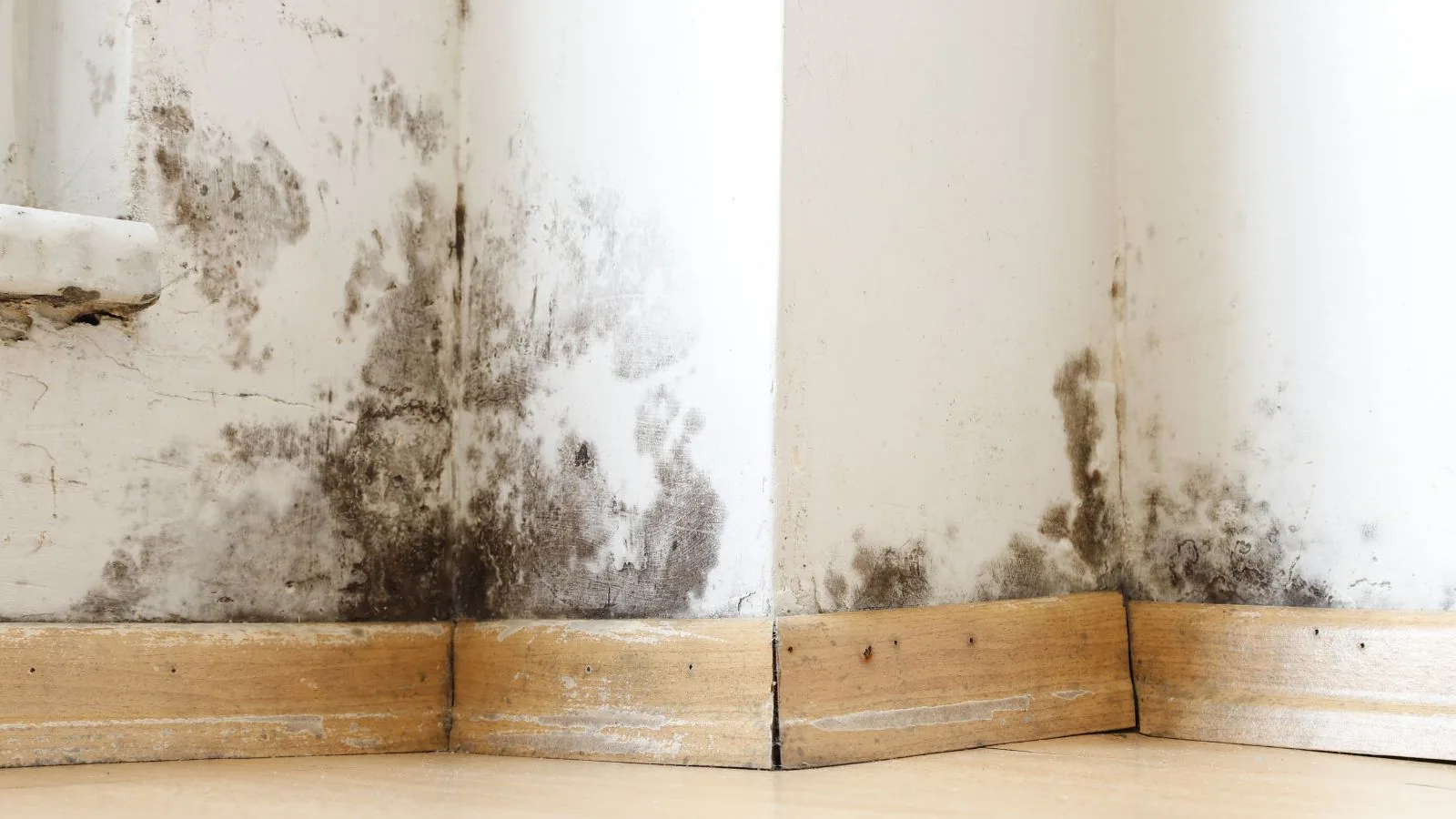
A musty smell after water damage in Benicia, CA is a sign that moisture is still somewhere in the structure. Candles, sprays and ozone cannot fix that, because the smell comes from damp materials. The fix is to find the wet material, dry it or remove it, and let readings confirm the result. This guide explains how to track a musty smell to its source.
This guide makes no health claims. Health questions belong to a physician, and mold testing and remediation follow their own standard, ANSI/IICRC S520.
Why a musty smell means moisture
Mold and mildew need moisture. When a leak, a flood or an appliance failure leaves materials damp, microbes can grow on surfaces and in hidden spaces, and they produce odor. The smell is often strongest where the air is still, such as inside walls, under carpet pad, behind cabinets and in closets.
If you smelled it soon after a leak, the likely cause is wet material you have not found. If it appears long after, a slow leak or a damp crawl space may be the source. Either way, the work is to locate the moisture.
Where to look first
- Under carpet and pad, especially along walls and in closets
- Behind and under cabinets near sinks, dishwashers and refrigerators
- Inside walls and ceilings below bathrooms and above appliances
- In crawl spaces and basements where air does not move
- Around air conditioner closets and condensate lines
Lift a corner of carpet and feel the pad. Look for stains, bubbled paint and swollen baseboards. A flashlight in a cabinet and a hand against a wall can reveal a lot.
What actually fixes the smell
The sequence is simple. Stop any leak, remove materials that cannot be dried, dry the rest with air movers and dehumidifiers, and verify with a moisture meter. After materials are dry or removed, odor usually fades. Cleaning surfaces without drying is a temporary fix at best.
| Where the smell is | Likely moisture source | Next step |
|---|---|---|
| Closet or carpet edge | Wet pad or a nearby leak | Lift carpet, check pad and subfloor |
| Under a sink or cabinet | Supply or drain leak | Dry cabinet, check wall and floor |
| Wall or ceiling | Leak inside the cavity | Moisture mapping, open if needed |
| Basement or crawl space | Seepage or a pipe leak | Find the source, dry and ventilate |
| Near an AC unit | Condensate overflow | Check the line and the area |
If the leak was long ago and a smell remains, ask for moisture readings. See carpet water damage restoration and wall and drywall water damage repair for how those materials are checked.
When to bring in testing
If you want to know whether mold is present and what kind, an independent inspector can sample. Remediation, when needed, follows the S520 standard and usually means containment, removal of affected materials and drying. Ask whether your state licenses mold work, because rules vary. The restoration line handles the water and drying side.
A note on health
This guide does not diagnose anything. If someone in the home has health concerns, ask a physician. Keep sensitive people away from damp, musty rooms while the source is found.
A short checklist for tracking an odor
- Close the house for an hour and walk room by room, noting where the smell is strongest.
- Check closets, cabinets and the area around plumbing walls first.
- Feel carpet edges and baseboards for dampness.
- Look for stains, bubbling paint or a swollen baseboard.
- Ask for moisture readings in the strongest area.
- Fix the source, dry or remove wet material and recheck.
If the smell returns after a rain or after using a fixture, the source is probably intermittent. Note when it appears, because that pattern helps a plumber or a roofer find the cause.
Why masking it makes things worse
Deodorizers and scented products can hide a smell for days or weeks, and in that time the moisture is still working on the materials. A masked smell can turn a small repair into a larger one. Dry first, then deal with any remaining odor.
Benicia note: old buildings and moisture
Benicia's downtown historic district was first recognized in 1969 and enlarged in 1987, and the commercial core was built mostly between 1879 and 1913. Buildings of that age have usually been repaired in layers over the decades, so a musty smell in one can come from a spot that is hard to see.
The practical step is a moisture meter and a thermal camera before opening anything, so the opening goes where the moisture is. Newer homes can have the same problem. The point is that age tells you nothing and readings tell you everything.
Source type: City historic district information
If you live in a Benicia neighborhood like Southampton, the same steps apply, and the same approach works across the border in Vallejo.
Common questions
Does an older downtown Benicia building smell musty more often?
No evidence supports that for any particular building. Readings find moisture. Age does not.
Can I just use a dehumidifier?
A household dehumidifier helps with room humidity, but it does not dry wet materials. Find the wet spot first.
Should I tear out carpet right away?
If the pad is wet and the water was dirty or has stood for days, removal is common. A reading decides.
Is musty smell always mold?
Not always, but it points to moisture. Testing can tell you.
Will odor products fix it?
They mask it. The source must be dried or removed.