
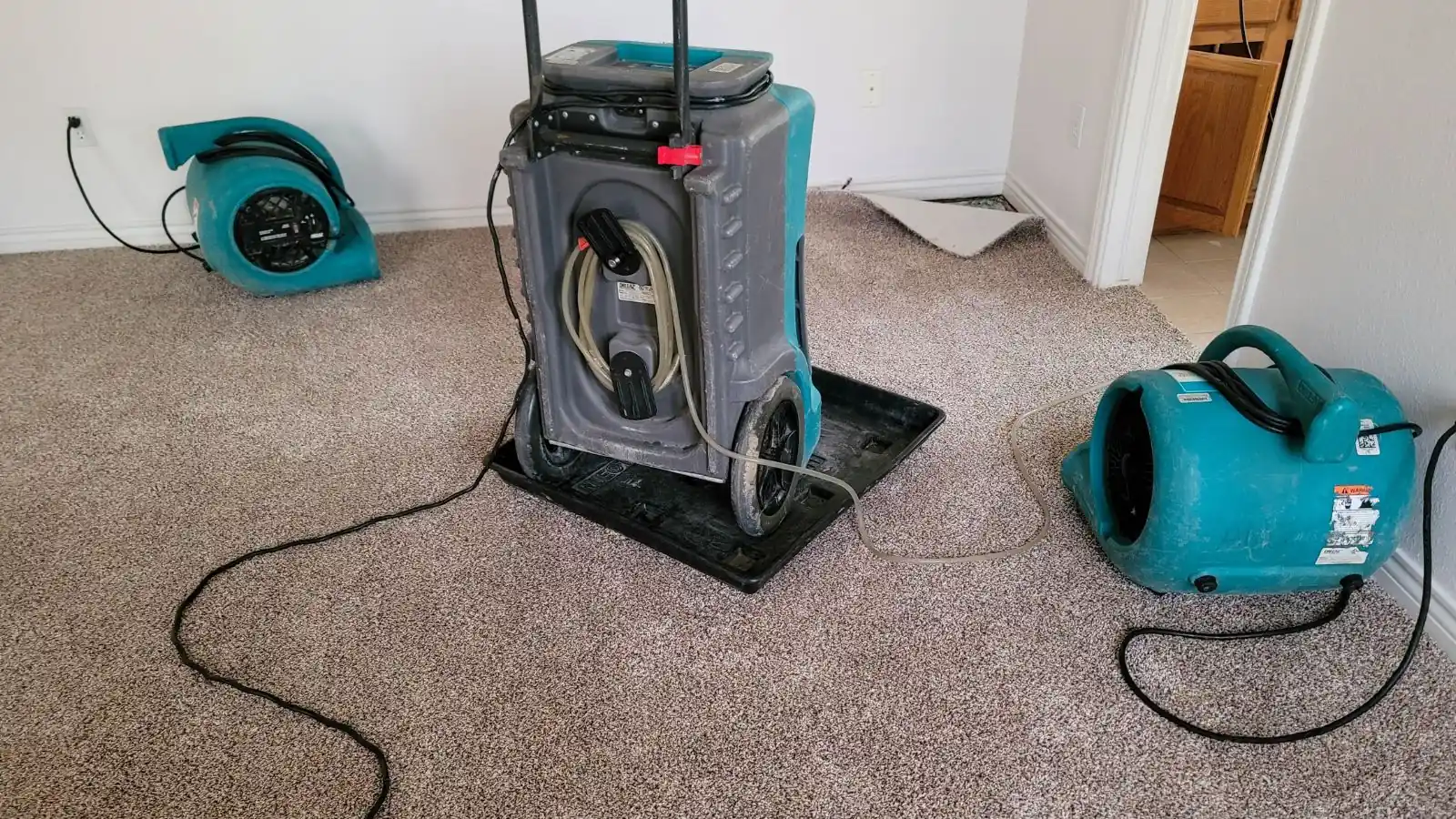
How long does water damage take to dry in Benicia, CA? For most residential losses, active drying with air movers and dehumidifiers takes several days, and some materials take longer. Nobody can responsibly give one number without readings, because the answer depends on what got wet, how much and for how long.
This guide explains the factors that set the timeline and how to tell when a structure is actually dry. It does not promise any schedule, because any promise made before readings is a guess.
What sets the drying timeline
Five things matter most. The first is the material. Drywall and carpet release moisture relatively quickly, while hardwood, framing lumber, plaster and concrete hold it for much longer. The second is the amount of water and how long it sat. A quick spill into a single room dries faster than a supply line that ran overnight through two floors.
The third is the water category. Clean water from a supply line dries the same way as any water, but contaminated water changes the job, because porous materials are often removed instead of dried. The fourth is air movement and humidity. Air movers push moisture off surfaces and dehumidifiers pull it out of the air. The fifth is how early the work starts, because every hour of standing water spreads it further.
| Material | Typical drying behavior | Why |
|---|---|---|
| Carpet and pad | Hours to a few days | Porous, loses moisture fast with airflow, though pad is often replaced |
| Drywall | Days | Absorbs and holds water, may be cut out if badly saturated |
| Hardwood floor | Days to weeks | Dense, dries slowly and can cup if rushed |
| Framing lumber | Days to weeks | Holds moisture deep in the wood |
| Concrete slab | Weeks | Very slow release, often needs special drying |
| Plaster and masonry | Days to weeks | Thick and porous, depends on thickness |
These are patterns, not promises. A thin spill and a flooded floor on the same material dry at different speeds.
How drying is measured
A restoration crew uses a moisture meter, and often a thermal camera, to map the wet area and record readings. The crew sets a dry standard by comparing readings to unaffected materials of the same kind in the building. Readings are taken at the start and at each visit. Drying is done when affected materials match that standard, not when the room feels dry.
A daily log of readings is also useful paperwork if you file an insurance claim. For more, see structural drying and dehumidification and water extraction, which comes before any of it.
Why surfaces lie
Paint and flooring can look and feel dry while the wall cavity or subfloor behind them is still wet. Closing walls too early traps that moisture and can lead to odor and damage later. That is why a crew asks to check readings before anything is closed up and why it does not stop when the surface looks fine.
Things that slow drying down
- Opening windows on a humid day, which can bring moisture back in
- Running only fans without a dehumidifier
- Leaving wet carpet pad or insulation in place
- Blocking air movers with furniture
- Stopping early because it feels dry
Things that help: removing standing water first, opening wet cavities where needed, keeping equipment running and following the readings.
What a fair timeline sounds like
A reliable answer sounds like this: here are the readings, here are the materials, and here is the reading we are aiming for. We will check again tomorrow. Be careful with a promise of a day count before anyone has measured anything.
What happens after the drying is done
Once readings show the structure is dry, the equipment is removed and the repair work can start. Drywall is patched or replaced, flooring is reinstalled and surfaces are painted. Skipping the dry confirmation and going straight to repairs is how moisture gets sealed in. A reading that matches the dry standard is a green light, and a feeling that a room seems dry is not.
Ask the crew to record the final readings and to tell you which materials were dried and which were removed. Keep that record with your claim paperwork and your repair invoices. If a problem shows up later, you will know exactly what was dry and when.
Safety steps for this kind of loss
- Keep cords and fans off wet floors
- Do not run heaters near wet materials
- Keep children and pets away from equipment
- Leave equipment running until readings confirm dry
Benicia note: bay air and humidity
Benicia sits on the Carquinez Strait, and the Bay Area Air Quality Management District, which covers Solano County south of the Dixon area, publishes air and weather information for the region. Marine air can bring damp conditions to waterfront areas, which can make a dehumidifier more important than fans alone.
The practical point is that a crew should control indoor humidity with equipment, not rely on opening windows. This note does not give a drying time for any address.
Source type: Regional air district information
The same logic applies across the strait in Vallejo, and in a Benicia neighborhood like Southampton, where concrete slabs, if your home has one, dry slowly.
Common questions
Can I speed up drying with box fans?
Fans move air but do not remove moisture from it. Professional drying pairs air movers with dehumidifiers and checks readings.
Why are the machines still running after the floor feels dry?
Because the wall or subfloor can still read wet. The crew stops when readings meet the dry standard.
Will drying damage hardwood?
Drying too fast can cause cupping or cracking, so crews often dry hardwood in a controlled way and check it often.
How much noise and electricity should I expect?
Air movers and dehumidifiers are loud and draw power. Ask how many will run and for how long.
What if it still smells after drying?
Ask for readings in the area. A smell can mean moisture remains in a hidden spot.