
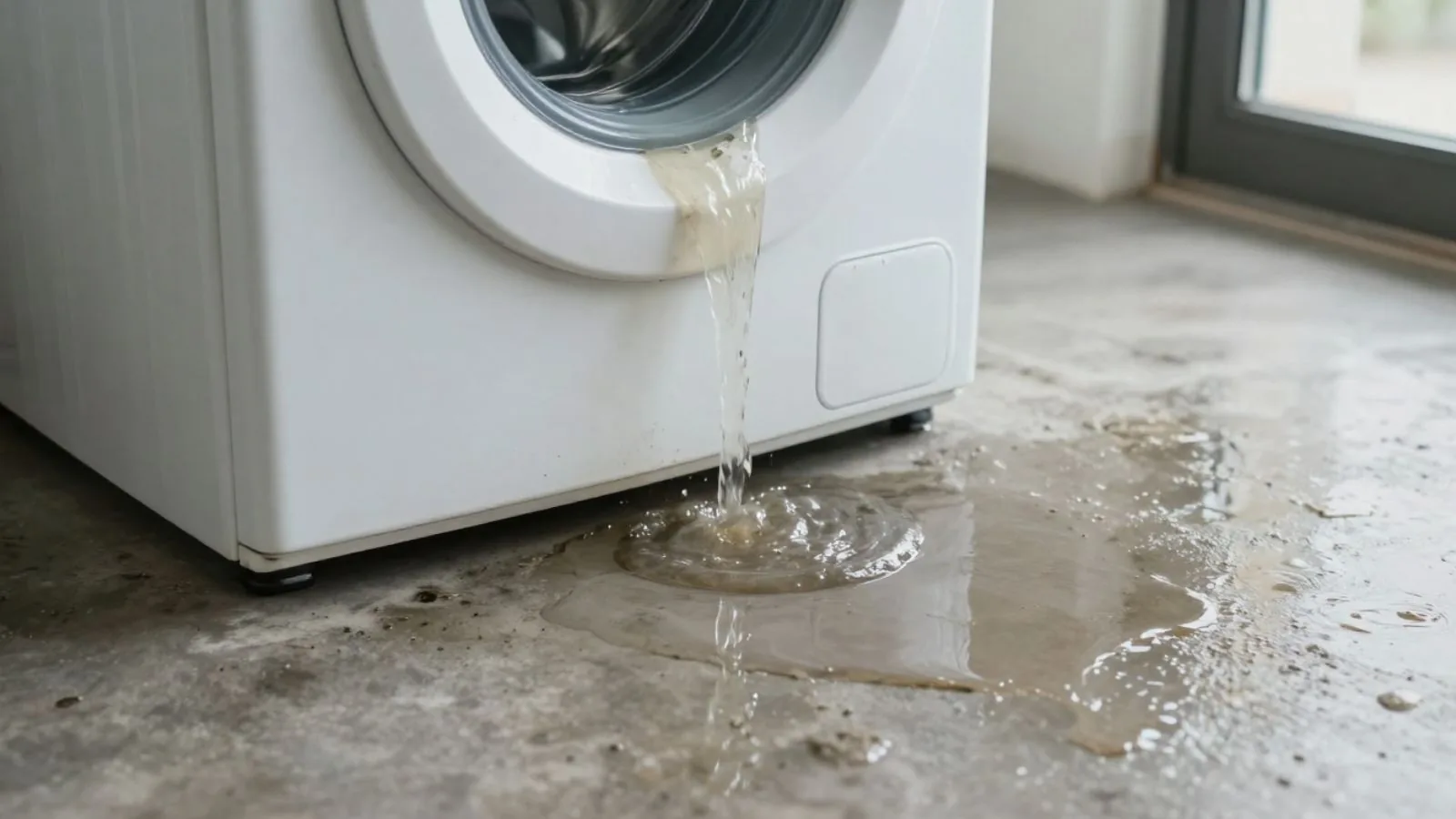
A hidden water leak in a Benicia, CA home usually announces itself in small ways before it becomes a big one. A water meter that moves when nothing is running, a bill that climbs, a warm spot on the floor or a musty corner are all clues. This guide shows how to check for a leak step by step and when to call a plumber.
Restoration crews dry and clean what the water damaged. They do not repair plumbing, so once you find a leak, a licensed plumber fixes the pipe and the crew handles the water.
Start with the water meter
Turn off every fixture and appliance that uses water, including the ice maker and irrigation. Find your water meter, look at the leak indicator or the small dial and watch it for several minutes. If it keeps moving, water is flowing somewhere. Note the reading, wait an hour with everything still off and check again. A changed reading is a strong sign of a leak on your side of the meter.
Check the usual suspects
- Toilets: add a few drops of food coloring to the tank and see if color shows up in the bowl without flushing
- Under sinks: feel the supply lines, the shutoff valves and the drain for dampness
- Water heater: look at the base and the pressure relief pipe
- Appliances: dishwasher, washing machine and refrigerator supply lines
- Irrigation: look for soggy ground or low pressure
Many hidden leaks are slow drips from a valve or a hose that nobody looks at. A flashlight and a dry paper towel pressed against a joint will show a drip clearly.
Look and listen for what the walls and floors show
Stains, bubbling paint, a soft baseboard and a floor that feels warm can point to a leak behind a surface. A leak in a pressurized line can make a faint hissing or running sound in a quiet house. A leak under a slab can warm a spot on the floor if it involves a hot line.
| Clue | Possible cause | Next step |
|---|---|---|
| Meter moves with everything off | Leak on your side of the meter | Isolate with the main shutoff, call a plumber |
| Warm spot on a slab floor | Hot water line leak | Call a plumber for leak detection |
| Stain or bubbling on a ceiling | Pipe above or roof leak | Check above, take readings |
| Musty smell in one spot | Hidden moisture | Moisture mapping |
| High bill with no change in use | Slow leak or running toilet | Meter check and fixture test |
Use readings, not guesses
A moisture meter and a thermal camera can show wet areas behind surfaces without cutting into them. A crew can map the wet area so any opening goes where it needs to. A plumber may use acoustic or other tools to locate the leak itself. If the water has already damaged materials, see structural drying and wall and drywall water damage repair.
What to do once you find it
- Shut off the water to the fixture or the main if you need to.
- Photograph the leak and the damage.
- Call a licensed plumber to repair the pipe.
- Call the restoration line to dry the area.
- Keep the failed part and the repair invoice for any claim.
Do not repaint or close up the area before it is dry. Hidden moisture behind fresh paint is a common cause of repeat problems.
Isolating a leak with the shutoff valves
If the meter moves and you cannot see why, narrow it down. Close the main shutoff at the house and watch the meter. If it stops moving, the leak is inside the house. If it keeps moving, the leak is between the meter and the house, often in the line running underground. That one test splits the problem in two and tells you which kind of plumber help you need.
You can go further by closing individual fixture shutoffs one at a time and watching the meter after each. When the movement stops, the last fixture you closed is likely the source. Keep notes as you go, since they help the plumber work faster.
What not to do
- Do not cut into walls or floors without readings, because it can create more damage
- Do not ignore a warm floor spot or a faint hissing sound
- Do not cover a stain with paint before you know the cause
- Do not assume a high bill is only an increase in the water rate
A plumber who repairs the leak should be licensed, which the Contractors State License Board lets you check, and the drying afterward follows ANSI/IICRC S500.
Benicia note: the city's water system and your side of the meter
The City of Benicia runs its water service through its public works department, and the line from the main to your meter is the city's side of the system. Everything after the meter is yours. That boundary matters when you find a leak, because it decides who repairs it.
If your meter keeps moving with everything off and the damp spot is near the street, contact the city. If the leak is inside the property line, a plumber fixes it. This note does not say where any particular address's boundary lies.
Source type: City public works information
The same checks work in a Vallejo home and in a Benicia neighborhood like Southampton. If your home sits on a slab, the meter test matters even more. See crawl space water damage for homes with raised floors.
Common questions
Does my water meter really show a leak?
If it moves while everything is off, water is flowing. Check toilets and irrigation first, since they are common causes.
Can I find a slab leak myself?
Warm floor spots and a moving meter are clues, but locating the leak takes a plumber with detection tools.
Who pays to find a hidden leak?
That depends on your policy. Ask your insurer whether it covers leak detection.
Will a restoration company find the leak?
A crew can show where the water went with readings. A plumber finds and repairs the pipe.
How fast should I act?
As soon as you suspect a leak. Slow leaks can damage framing and flooring over time.
Found water where it should not be?
Call the 24/7 line and describe what you see.
☎ Call (833) 521-1033