
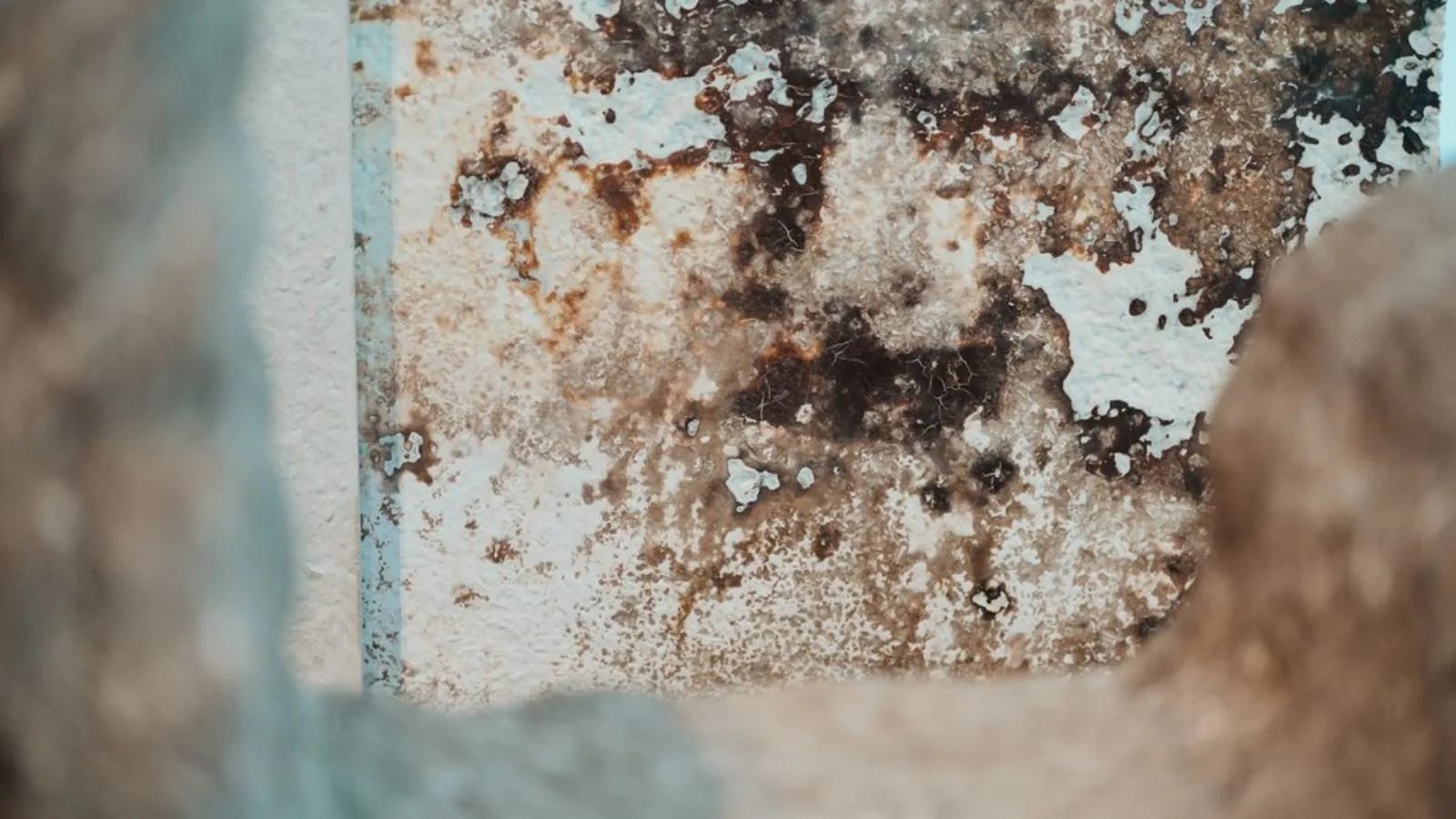
Checking a Benicia, CA home for water damage before buying can save you from a costly surprise. Fresh paint, new flooring and air fresheners can hide problems, and a good look at the right places tells you a lot. This guide gives a buyer checklist for a showing and explains when to ask for a professional inspection.
A showing is not an inspection. If you find signs of water, ask your agent about a licensed inspector and a moisture scan before you commit.
Look at ceilings and walls
Check ceilings below bathrooms, kitchens and the roof for stains, fresh paint patches and cracks. Look at the lower part of walls for bubbling, peeling or a different texture. A stain with rings can mean repeated wetting. Fresh paint on only one patch of ceiling is worth a question.
Check floors and baseboards
Look for cupping or buckling in wood floors, swollen baseboards and soft spots near tubs, toilets and sinks. Press gently on floors near those fixtures. Check for a mismatch between old and new flooring in only one area.
Look under sinks and around appliances
Open cabinet doors and look at the supply lines, shutoff valves and drains. Look for rust, mineral crusts, warped cabinet floors and stains. Check around the water heater, the washing machine and the dishwasher for signs of old leaks.
| Place | What to look for | What it may mean |
|---|---|---|
| Ceilings | Stains, rings, patches | Roof or plumbing leak |
| Wall bases | Bubbling, soft drywall | Moisture from below or outside |
| Wood floors | Cupping, buckling | Past or present moisture |
| Under sinks | Rust, crust, warped base | Slow leak |
| Garage and crawl space | Damp, stains, efflorescence | Drainage problem |
| Outside grade | Soil sloping toward the house | Water pushed toward foundation |
Use your nose
A musty smell in a closet, a basement, a garage or a bathroom points to moisture. Strong air freshener or an unusually heavy use of candles can be a reason to ask why. A smell is a clue and not proof, so follow it with a moisture reading.
Look outside and up
Check the roof for missing or lifted shingles and the gutters for staining or overflow. Check whether downspouts empty near the foundation and whether the ground slopes toward the house. Look for water stains on exterior walls under windows. These are common routes for water into a home.
Ask the right questions
- Has the home had any leaks, floods or insurance claims?
- Were there repairs, and are there records or permits?
- Is there a seller disclosure listing water issues?
- Has the roof, water heater or plumbing been replaced, and when?
- Are there any flood zone or insurance requirements?
Ask for records and keep copies. If water damage is found, see basement water damage cleanup and slab leak water damage for what those problems involve.
When to bring in a professional
A visual check is a start. If you find a stain, a soft spot or a smell, ask for a moisture scan before you commit. A professional can use a meter and a thermal camera to look behind surfaces without opening them, and can tell you whether the area is wet today. That does not date old damage, but it shows what is active now.
Ask the inspector to check the attic, the crawl space or garage walls, the base of exterior walls and the areas around the water heater and the kitchen sink. Ask for written findings. If the scan shows moisture, you can use the report to ask for repairs, a price reduction or a closer look before closing.
Using what you find in negotiation
Your agent can use a written scope for repairs as part of a negotiation. Get the scope before you decide, because a vague worry is harder to price than a document. Remember that a repair done properly is not a reason to walk away, and a problem that nobody can explain might be one.
If a scan shows moisture, ask the inspector which standard the findings follow, and remember that ANSI/IICRC S500 is the reference for water damage restoration.
Benicia note: flood maps and the Flood Damage Prevention chapter
Benicia's Flood Damage Prevention chapter bases the city's special flood hazard area on a FEMA Flood Insurance Study dated August 3, 2016, and the city keeps the flood map on file at 250 East L Street. A buyer can check an address on the FEMA Flood Map Service Center and ask a lender or an insurance agent whether flood coverage is required.
Ask about this early, because flood coverage can affect monthly costs. This note does not say whether any address is in a mapped area, and the seller's disclosure is another source to check.
Source type: Municipal code, Benicia Flood Damage Prevention chapter
Buyers looking at older homes downtown can read about downtown Benicia, and buyers across the strait can read about Vallejo.
Common questions
Should I hire a moisture inspector?
If you see any sign of water, yes. A licensed home inspector can recommend more testing.
Can I negotiate if I find water damage?
Often, through your agent. Get the scope in writing before you negotiate.
Is fresh paint a bad sign?
Not by itself, but a single fresh patch on a ceiling is worth asking about.
Does the seller have to disclose leaks?
California requires sellers to make certain disclosures. Ask your agent what applies.
What if the home is in a flood zone?
Ask a lender and an insurer what is required and what it costs.